
Traditional Marketing vs Digital Marketing: Which One is Better for Businesses Today?
The debate around traditional marketing vs digital marketing has become more important as businesses look for effective ways to reach customers. While traditional methods have been trusted for decades, digital channels offer new opportunities for growth, targeting, and measurable results. Understanding the strengths and weaknesses of both approaches helps businesses choose the right strategy for their goals.
What is Traditional Marketing?
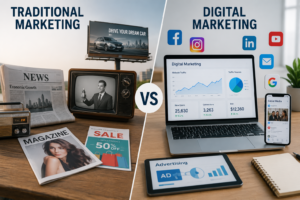
Traditional marketing refers to promotional activities that use offline channels to communicate with customers. These methods include newspaper advertisements, television commercials, radio ads, billboards, brochures, flyers, and magazine promotions.
Traditional marketing is highly effective for reaching local audiences and building brand recognition in a specific geographic area. Large companies have relied on these methods for many years because they can create a strong and lasting impression.
However, traditional marketing campaigns often require a significant budget and make it difficult to track customer engagement and campaign performance accurately.
What is Digital Marketing?
Digital marketing uses online platforms and technologies to promote products and services. Popular digital marketing channels include search engines, social media platforms, email marketing, content marketing, and paid advertising.
Businesses can target specific audiences based on age, location, interests, and online behavior. This makes digital marketing more precise and cost-effective than many traditional methods.
Another major advantage is real-time analytics. Companies can measure website traffic, conversions, click-through rates, and customer engagement instantly, helping them improve campaigns quickly.
Traditional Marketing vs Digital Marketing: Key Differences
When comparing traditional marketing vs digital marketing, several important differences become clear.
1. Cost
Traditional marketing generally requires higher investment because of printing, broadcasting, and placement costs. Digital marketing campaigns can start with smaller budgets and scale as needed.
2. Audience Targeting
Traditional marketing reaches a broad audience, while digital marketing allows businesses to target specific customer segments with precision.
3. Performance Tracking
Tracking results in traditional campaigns can be challenging. In contrast, digital platforms provide detailed reports and analytics.
4. Customer Interaction
Traditional advertising is mostly one-way communication. Digital channels encourage conversations, comments, reviews, and direct engagement with customers.
5. Campaign Flexibility
Making changes to newspaper ads or billboards after publication is difficult. Digital campaigns can be edited, optimized, and improved at any time.
Which Marketing Method Should You Choose?
The answer depends on your business objectives and target audience. Local businesses serving older demographics may benefit from traditional advertising methods. Meanwhile, businesses targeting younger and internet-savvy audiences often achieve better results through digital channels.
In many cases, combining both methods creates the best outcomes. A business can use newspaper advertisements to build awareness while using social media and search engine marketing to generate leads and conversions.
This balanced approach allows companies to enjoy the advantages of both strategies.
Conclusion
The discussion about traditional marketing vs digital marketing is not about choosing a winner but about selecting the right mix for your business goals. Traditional marketing offers trust and broad visibility, while digital marketing delivers affordability, targeting, and measurable performance.
If you are looking to grow your business online, working with a Digital Marketing Strategist in Kannur can help you create effective campaigns, improve visibility, and achieve long-term growth in the competitive digital landscape.
